Technology
Autonomous Vehicles and the Future of Ride-Sharing Platforms
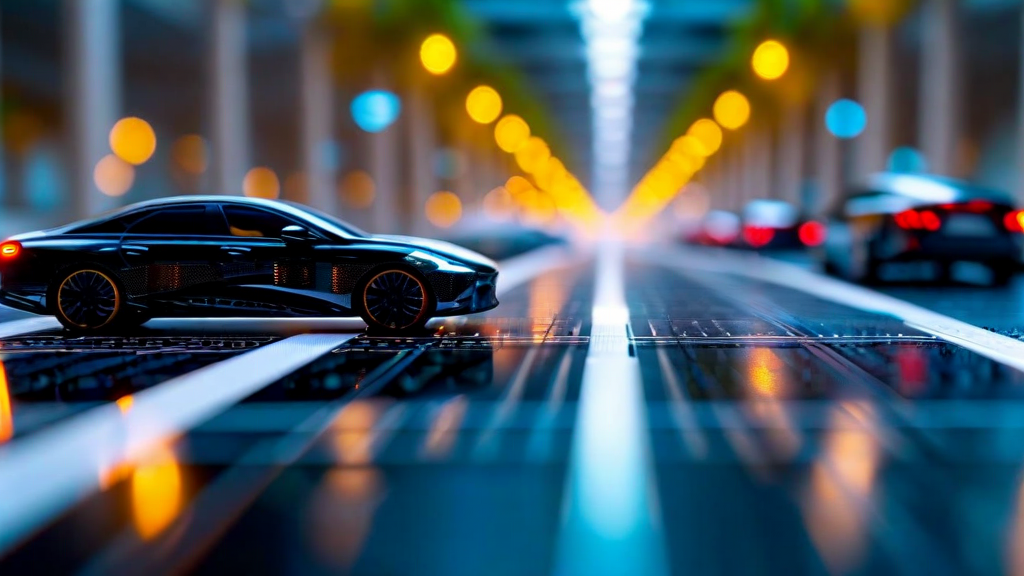
The prospect of fully autonomous ride-hailing vehicles has been a fixture of technology forecasts for nearly a decade, promising a future where robotaxis eliminate the driver cost that represents 60–70% of the expense of a ride-hailing trip. Major technology companies, traditional automakers, and dedicated AV startups have collectively invested over $100 billion in pursuit of this vision. The progress has been real but uneven — autonomous vehicles are now operational in commercial ride-hailing deployments in several American and Chinese cities, but the path from these carefully geofenced operations to the universal deployment that justifies the investment hype has proven far longer and more technically challenging than early projections suggested.
For ride-sharing platforms operating today, the appropriate relationship to AV technology is neither denial nor uncritical enthusiasm. The technology is advancing, the commercial deployments are real, and the long-term impact on the industry will be substantial. But the timeline and the nature of that impact in markets like India is significantly different from what applies in San Francisco or Phoenix, and the implications for driver-first platforms are more nuanced than the simple narrative of "robots replacing drivers" would suggest.
The Current State of AV Technology
As of mid-2024, Level 4 autonomous vehicles — capable of operating without human intervention within specific geographic domains — are commercially operational in several markets. Waymo operates a paid robotaxi service in Phoenix and San Francisco. Baidu's Apollo Go operates over 100 vehicles across multiple Chinese cities. Cruise, before its operational pause following a safety incident, had demonstrated viable operations in San Francisco. These deployments represent genuine technical achievements and meaningful commercial operations, though they collectively represent a tiny fraction of total ride-hailing trips in their markets.
The technical challenges that have slowed AV deployment are well-documented: edge case handling in complex urban environments, sensor performance in adverse weather conditions, the difficulty of training systems for the full distribution of scenarios they will encounter at scale, and the regulatory frameworks needed to enable commercial deployment. These challenges have proven harder to resolve than early projections suggested, and the consensus among serious technical observers is that a timeline of 15–25 years for substantial market penetration in complex urban environments is more realistic than the 5–10 year forecasts that were common in 2018–2020.
AV Technology in the Indian Context
The timeline for AV deployment in Indian urban environments is almost certainly longer than in the markets where early deployments have occurred. Indian urban traffic presents a uniquely complex challenge for autonomous systems: high-density mixed-flow environments with two-wheelers, auto-rickshaws, pedestrians, animals, and vehicles of widely varying sizes sharing the same road space; informal behavioral norms around lane discipline and yielding that are learned by human drivers through years of experience; and infrastructure quality that varies enormously within a single city.
Experts in autonomous systems estimate that Indian road conditions are among the hardest in the world for AV technology, potentially requiring an additional decade of development beyond what is needed for deployment in the structured road environments of American or European cities. This is not a failure of Indian transportation infrastructure — it reflects the organic, human-negotiated nature of how Indian cities actually work — but it has significant implications for how ride-hailing platforms operating in India should think about the AV horizon.
For Namma Yatri, the practical implication is that our driver community will remain the core of our operational model for the foreseeable future — certainly for the next decade and likely well beyond. This is not a reluctant acknowledgment of technological limitations; it reflects our genuine conviction that human drivers, embedded in local communities with contextual knowledge that no algorithm can replicate, provide a quality of service that pure automation cannot match in complex Indian urban environments.
Platform Architecture for a Hybrid Future
While full autonomy in Indian conditions remains distant, partial automation technologies are already changing the driver experience and will accelerate in impact over the coming years. Advanced driver assistance systems (ADAS) including lane centering, automatic emergency braking, and adaptive cruise control are becoming standard on new commercial vehicles. Navigation systems with real-time traffic optimization already reduce the cognitive load of routing decisions. In-vehicle monitoring systems that can detect driver fatigue and distraction are beginning to appear in commercial fleet vehicles.
Namma Yatri is designing our platform architecture to support this gradual automation continuum. Our driver app already provides real-time navigation with predictive traffic routing, suggesting optimal routes before congestion develops. We are developing vehicle connectivity APIs that will allow driver assistance data from equipped vehicles to improve our routing algorithms and support safety interventions. This positions us to seamlessly integrate new assistance technologies as they become available without requiring fundamental platform redesign.
The Driver Transition Question
Any honest discussion of AV technology and ride-sharing must address the driver displacement question directly. If autonomous vehicles eventually become viable at scale in urban India, the economic case for replacing human drivers with robot vehicles is straightforward — labor is the largest cost in ride-hailing operations, and eliminating it would dramatically improve per-trip economics for platform operators. The community of professional drivers whose livelihoods depend on ride-hailing employment would face significant disruption.
Namma Yatri's position on this question is honest about the tension. We are a driver-first platform whose current model depends on driver labor and whose mission is to serve driver communities well. We cannot commit to never participating in a technology transition that we cannot fully control and that will eventually reshape the industry. What we can commit to is: operating transparently about our technology direction, providing maximum notice and transition support if and when automation changes the nature of driver work, investing in driver financial resilience and diversification now while the transition is distant, and advocating for public policy frameworks that ensure technology transitions in transportation include meaningful support for affected workers.
Open Source in an Automated Future
The open-source dimension of Namma Yatri's platform has particular relevance for the longer-term AV question. Proprietary AV systems controlled by large corporations will, if they achieve scale, create new forms of the same dependency and value-extraction dynamics that community-oriented platforms are trying to address in human driver ride-hailing. An Uber or Lyft operating a proprietary robotaxi fleet would capture the entire value of the trip, with no driver community to advocate for equitable distribution.
Open-source AV infrastructure — and there are serious efforts to develop this, including Waymo's and Apollo's selective open-sourcing of components, and academic efforts to develop fully open AV stacks — could enable community-owned automated mobility that preserves the democratic accessibility of the technology. Cities and transit authorities with access to open AV technology could operate public robotaxi services that maintain the accessibility and equity commitments that private operators may not prioritize.
Key Takeaways
- Level 4 AV technology is commercially operational in limited deployments but represents a small fraction of total rides in those markets
- Indian urban traffic conditions present uniquely complex challenges for AV systems, extending deployment timelines by potentially a decade beyond Western markets
- Partial automation via ADAS technologies is changing driver experience and platform capabilities now, independent of full autonomy timelines
- Driver communities deserve honest, transparent communication about long-term technology directions, including genuine transition support commitments
- Open-source AV infrastructure could prevent automated mobility from recreating extractive platform dynamics without human drivers to advocate against them
Conclusion
Autonomous vehicles will eventually reshape ride-sharing platforms in profound ways — the economic logic is too powerful and the technology trajectory too clear for any other conclusion. But the timeline in complex markets like India is measured in decades, not years. For Namma Yatri, the relevant horizon is the world we are operating in now and will be operating in for the foreseeable future: a world where professional human drivers are the core of ride-hailing service, where their welfare and economic security deserve genuine protection, and where platform design choices about commission structures, data transparency, and governance have immediate and substantial impacts on real lives. We will prepare for the automated future while fully committing to the human-powered present.